ChenovaTech
Exploring Fire-Safe, High-performance Acoustic panels developed from Recycled Textile waste for Green Buildings
Improving sound quality in speech-focused environments while validating circular material performance
Currently under design validation and performance testing for acoustics, fire safety, and green building compliance.
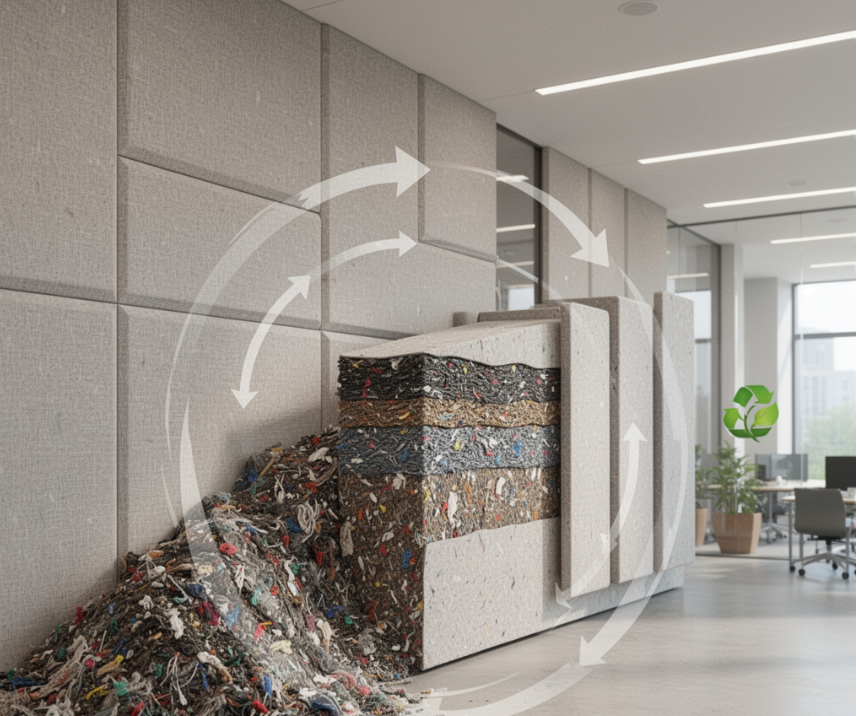
Recycled Textile Acoustic panels for commercial interiors
ChenovaTech is assessing acoustic wall panels made from recycled textile waste for interior sound absorption and reverberation control in offices, classrooms, and institutional spaces.The focus is on improving speech clarity in enclosed environments where sound quality matters.This initiative is currently at a concept and validation stage, prior to prototype development or laboratory testing.
Balancing Acoustic performance and Sustainability in commercial interiors
Commercial and institutional buildings increasingly require interior acoustic solutions that improve speech clarity while meeting practical constraints.In real projects, acoustic wall panels are evaluated not only on sound absorption performance (NRC), but also on fire behavior, cost, durability, and ease of installation.Adoption depends on how well these requirements align with real-world compliance needs and budget sensitivity.Understanding these constraints early helps assess where recycled acoustic panels can be practically and responsibly applied.
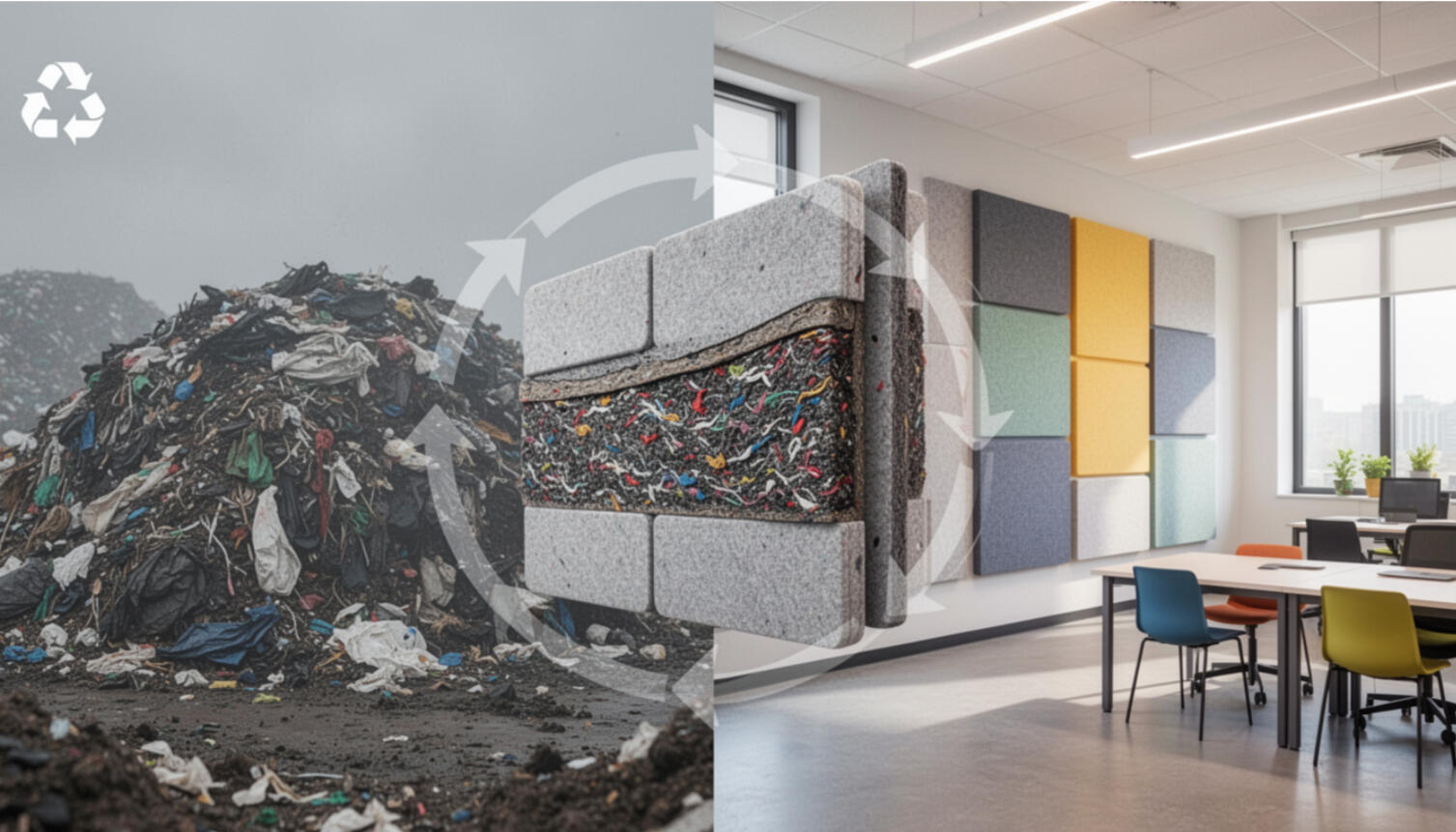
From Textile Waste to Circular Building materials
Large volumes of textile waste are still downcycled or landfilled, leading to material loss and climate impact.Buildings, meanwhile, are long-lived systems in which material choices influence environmental outcomes over decades.This exploration is conceptually aligned with the principles of the circular economy and the relevant Sustainable Development Goals (SDGs), including sustainable cities, responsible consumption, and climate action.Interior acoustic wall panels may offer a durable use case for textile waste within the built environment, provided technical and commercial feasibility is established.
What Published Research indicates
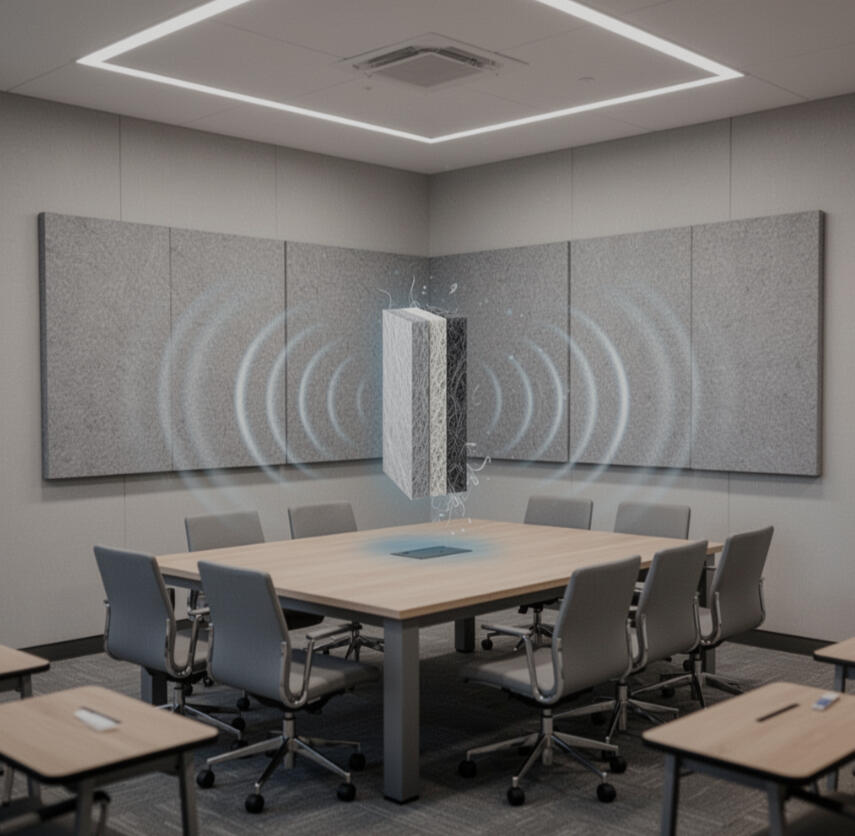
Published research on sound-absorbing wall panels indicates that nonwoven and felt-based textile materials can provide effective mid-frequency sound absorption, particularly in speech-focused environments such as offices and classrooms.Across studies, panel thickness and material density have a stronger influence on acoustic performance than fiber type.These panels are designed for sound absorption and reverberation control, not for full soundproofing or noise isolation.This distinction is important when defining application fit and performance expectations.
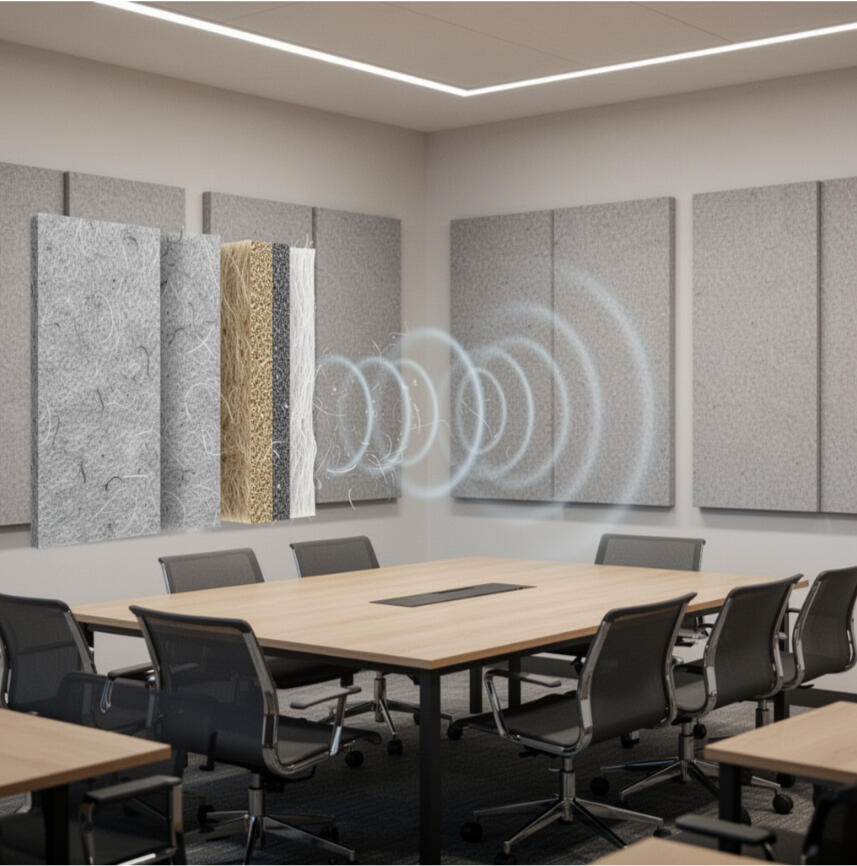
Technical direction under Evaluation
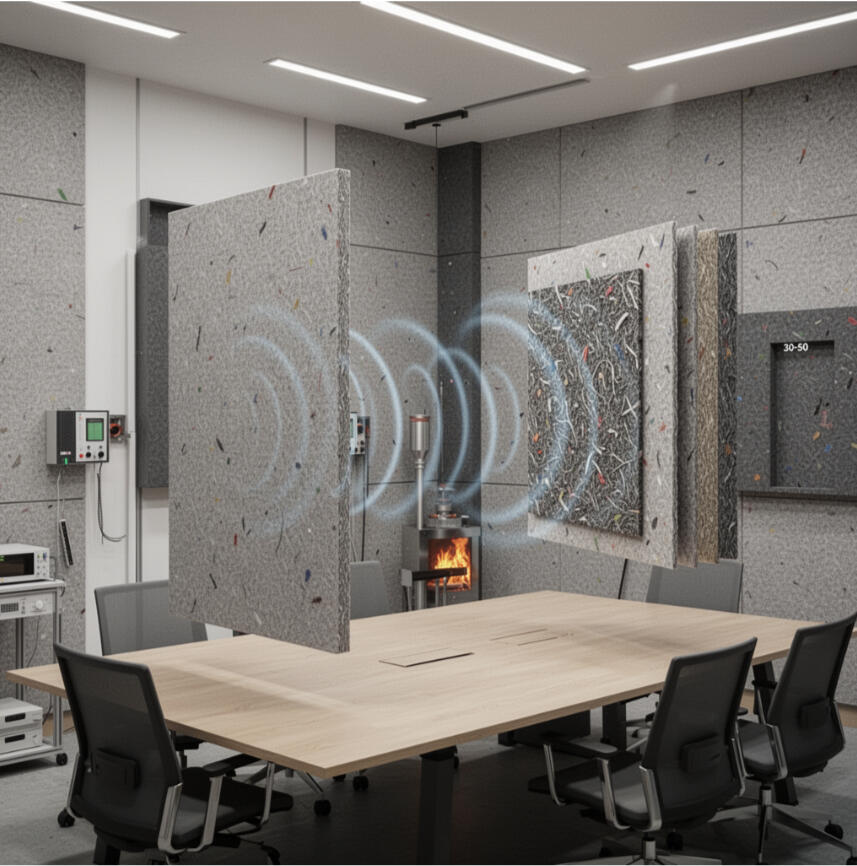
The technical direction being explored focuses on recycled textile nonwoven or felt-based materials, typically in the 30–50 mm thickness range, intended to improve interior sound quality and reduce echo.Key parameters under evaluation include: Acoustic performance trends (NRC across mid frequencies), Material density and thickness optimization, Fire behaviour and compliance pathways, Installation practicality for interior walls, Durability and long-term performanceAt this stage, validation outcomes and laboratory testing will determine the final NRC values, fire behavior classifications, and certifications.
Who this is for
This product is specifically designed for green building projects that are evaluating low-carbon acoustic materials. The design is intended for architects, interior designers, ESG consultants, and developers who are evaluating circular, fire-safe, and indoor air-compliant solutions that align with IGBC, GRIHA, and LEED requirements.This is a concept-stage product under technical and market validation. It is not a commercial offering at this stage.
How this exploration is being conducted
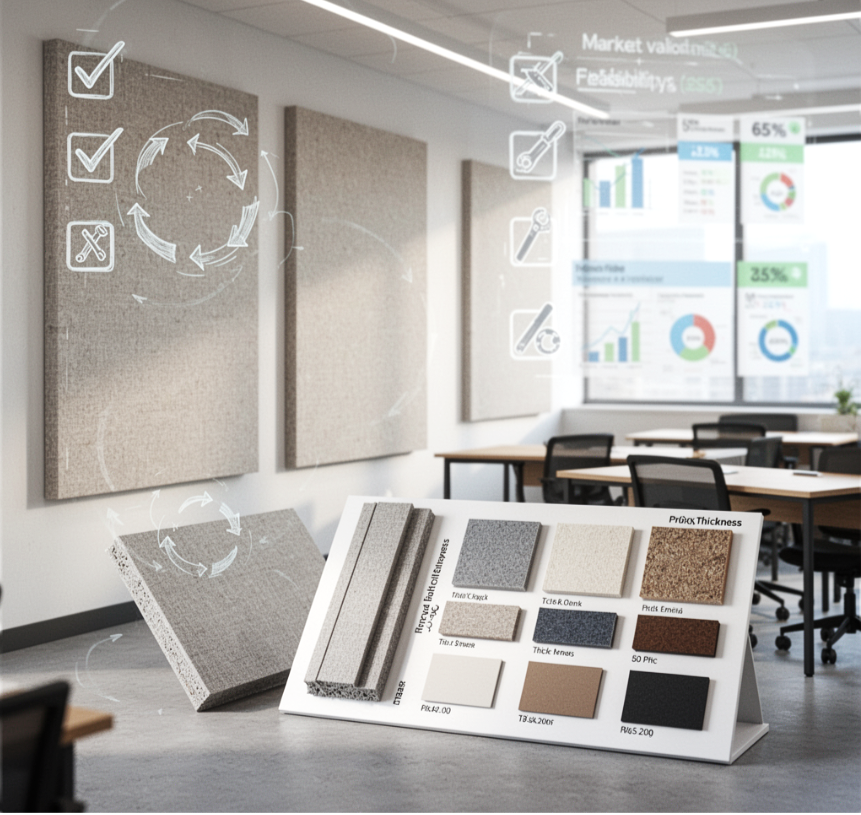
Market interest, application fit, and practical constraints are being explored before committing to manufacturing decisions, with a clear focus on interior acoustic wall applications.
Circularity and sustainability are treated as technical and commercial parameters to be validated, not assumptions.
What Registering interest means
Registering interest involves no purchase or pilot commitment. It helps surface real-world requirements related to acoustic performance, fire behaviour, cost sensitivity, and installation considerations.Selected respondents may be contacted for short, exploratory discussions only.
Register Interest
This page is intended solely for demand validation. It does not constitute an offer, solicitation, or representation of future product availability, performance, or certification.